Not Logging Workouts Costs You Gains: The Simple Fix That Works
If you are not tracking sets, reps, and weight, you are leaving progress on the table. Here is a clean, low-friction way to log.
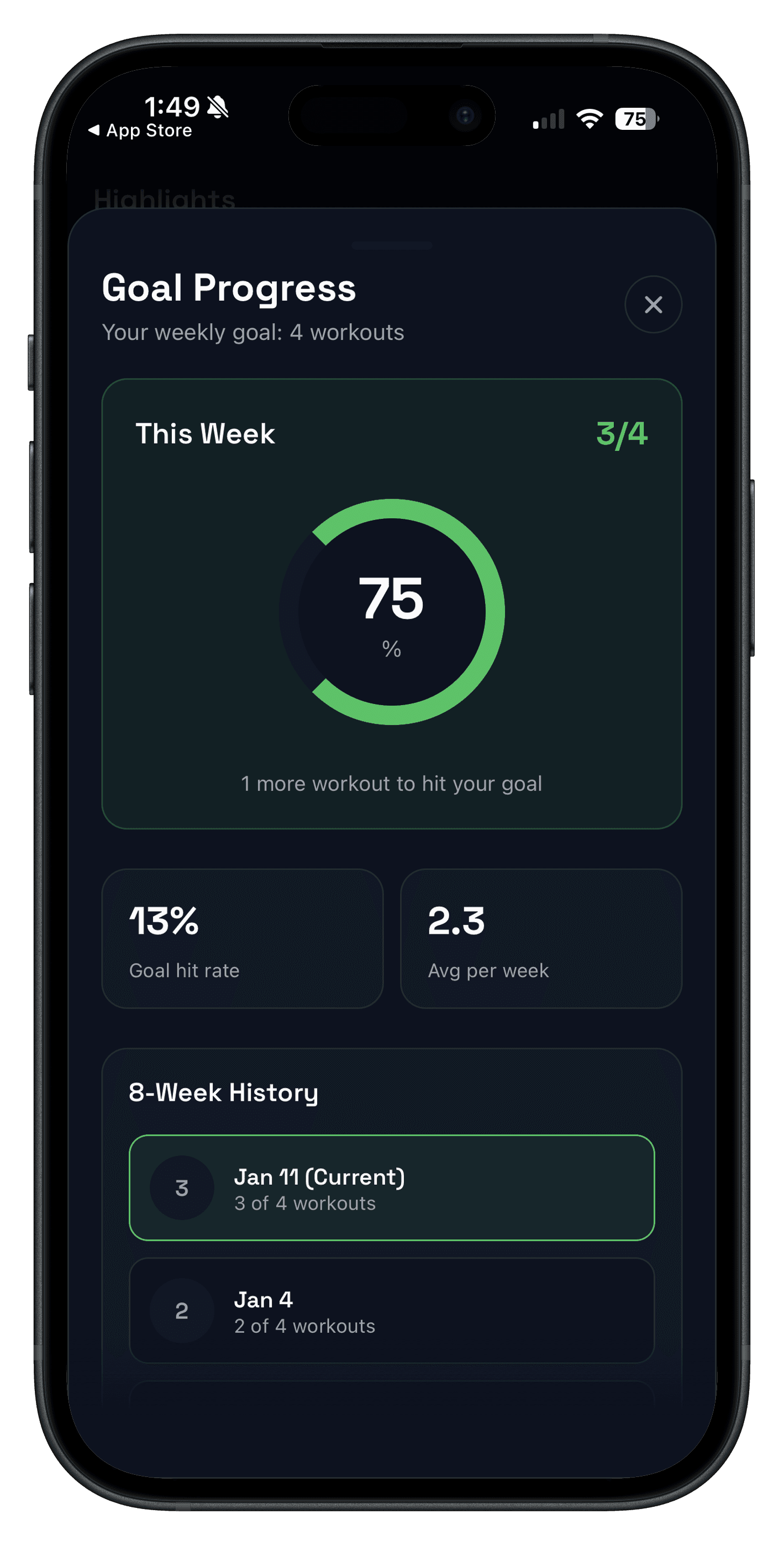
If you are not logging your workouts, you are training on guesswork. You might feel busy, but you are missing the tiny adjustments that drive real gains.
Logging is not about spreadsheets. It is about knowing what you did last time so you can do a little more next time. That is progressive overload in its simplest form, and it is the fastest route to consistent results.
If you want a strength training tracker that makes progress obvious, see our strength training tracker guide.
The real cost of not logging workouts
When you do not log, three things happen:
- You repeat the same weights and reps without realizing it.
- You forget what worked, so every session starts from scratch.
- You cannot spot trends in strength or fatigue.
The result is slow progress and wasted effort. Logging is the small habit that keeps your training honest.
What to log (keep it simple)
You only need a few data points to make progress:
- Exercise name
- Weight
- Reps
- Sets
- Optional notes for effort or form
If your log captures these five, you are covered.
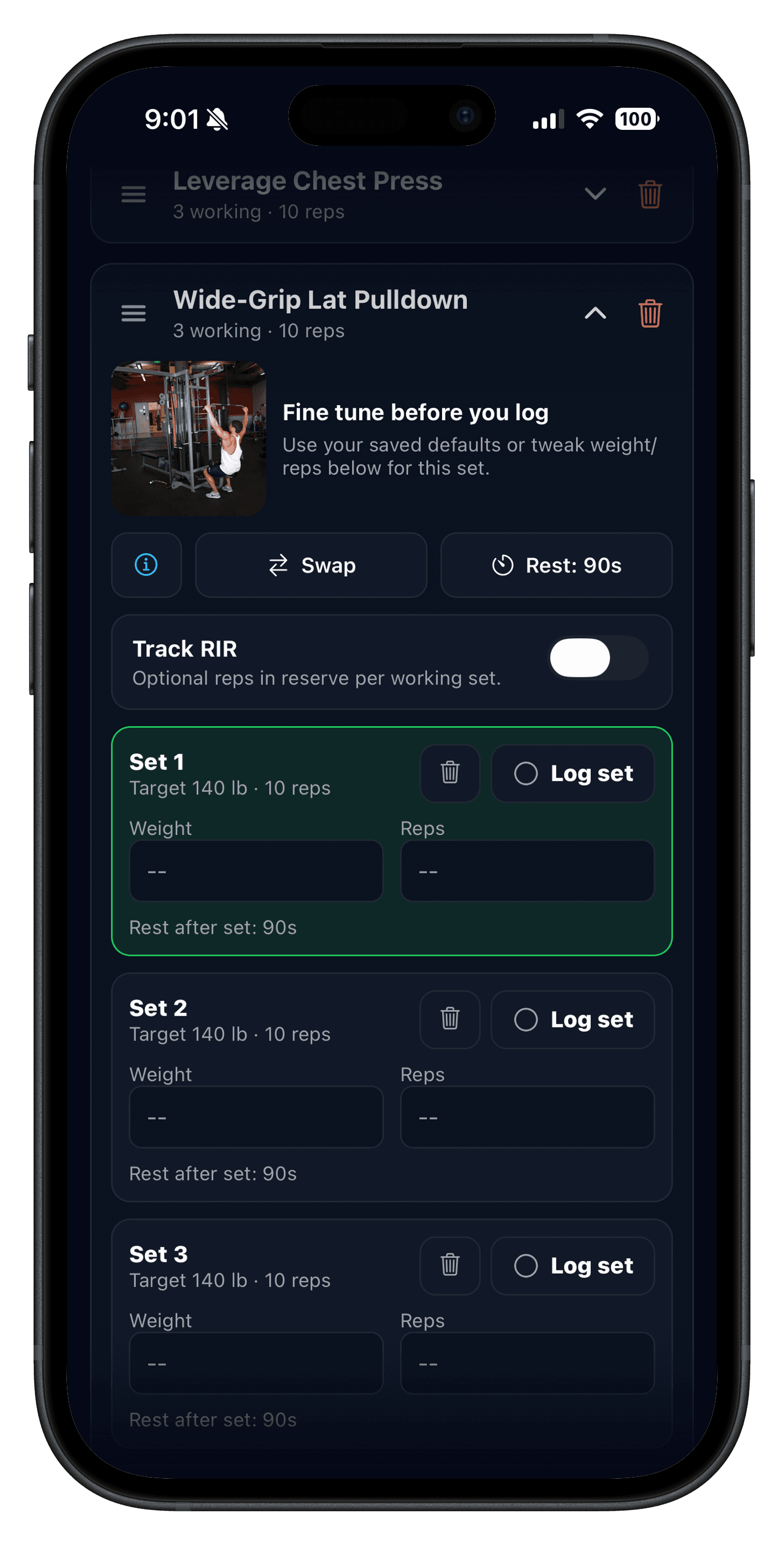
A low-friction logging system
- Save a template once for your main lifts.
- Log sets as you go with quick taps.
- Review last week before you start.
The key is speed. If logging takes more than a few seconds, you will skip it. Build a system that takes almost no willpower.
How logging unlocks progressive overload
Progressive overload is simple: do a little more than last time. Without a log, you are guessing. With a log, you can plan the next small win: one extra rep, 2.5 lb more, or a cleaner set.

Why consistency beats intensity
People overestimate what they can do in one week and underestimate what they can do in twelve. Logging keeps you consistent, and consistency is where gains live.
If you are training with friends, a quick check-in helps even more.Squads and accountability
FAQ
Do I need a workout tracker app to log?
No, but an app makes it faster and more consistent.
How often should I log workouts?
Every session. The habit only works when it is automatic.
What if I miss a workout?
Log the next one. Consistency wins over perfection.
Related reading
- Workout Log: Track Sets, Reps, and Weight Without Overthinking
- Progressive Overload Explained: How to Get Stronger Without Overthinking Your Training
- Workout Apps: How to Choose the Best Workout App for Your Training
Ready to log without friction?
Push/Pull is available now on the App Store. It is a social-first workout tracker with fast logging, clear progress history, squads for accountability, and optional AI planning.