How Often Should You Work Out to See Real Progress? (And Why Consistency Beats Intensity)
The best results come from 2 to 4 workouts per week with a system you can repeat, not a plan you quit.
If you have ever searched "how often should I work out?" you have probably seen answers ranging from every day to three times per week to it depends. Those answers are not wrong. They are just incomplete.
The real question is not how often you can work out. It is how often you will actually show up consistently, week after week. That is where most people lose progress.
If you want a system that keeps you consistent, start with our best gym tracker app guide.
The real problem: inconsistent training, not bad programs
Most lifters do not fail because:
- Their split is wrong
- Their exercises are suboptimal
- Their program is not advanced enough
They fail because training becomes inconsistent. Miss a week. Restart next Monday. Change programs again. Progress does not compound when training resets every few weeks.
What the research (and reality) actually shows
- 2 to 4 training sessions per week is enough to build muscle and strength.
- Results depend more on weekly consistency than session length.
- Missed workouts matter more than imperfect workouts.
Three solid workouts every week for six months will outperform an aggressive plan you quit after three weeks.
Why most people overestimate frequency
When motivation is high, people plan for:
- Six days a week
- Long sessions
- Perfect adherence
But motivation fades. Schedules change. Life happens. When the plan collapses, progress stops entirely.
The sweet spot: minimum effective consistency
- 2 days per week: maintenance plus slow progress
- 3 days per week: strong, sustainable progress
- 4 days per week: faster gains if recovery allows
Anything beyond that only works if you enjoy training that often, recover well, and are not forcing it. More workouts do not automatically mean more results. Missed workouts erase momentum.
Consistency is a system, not willpower
People stay consistent because the system is easy to follow, not because they have endless discipline. That means:
- Simple workouts
- Clear tracking
- Visible progress
- Some form of accountability
When progress is visible, motivation follows.
Why tracking makes consistency easier
Logging workouts does three important things:
- Removes guesswork
- Shows progress even when it feels slow
- Creates a reason to show up again
When you can see that you lifted more weight than last week, skipping feels harder.Clear progress tracking
Where Push/Pull fits in
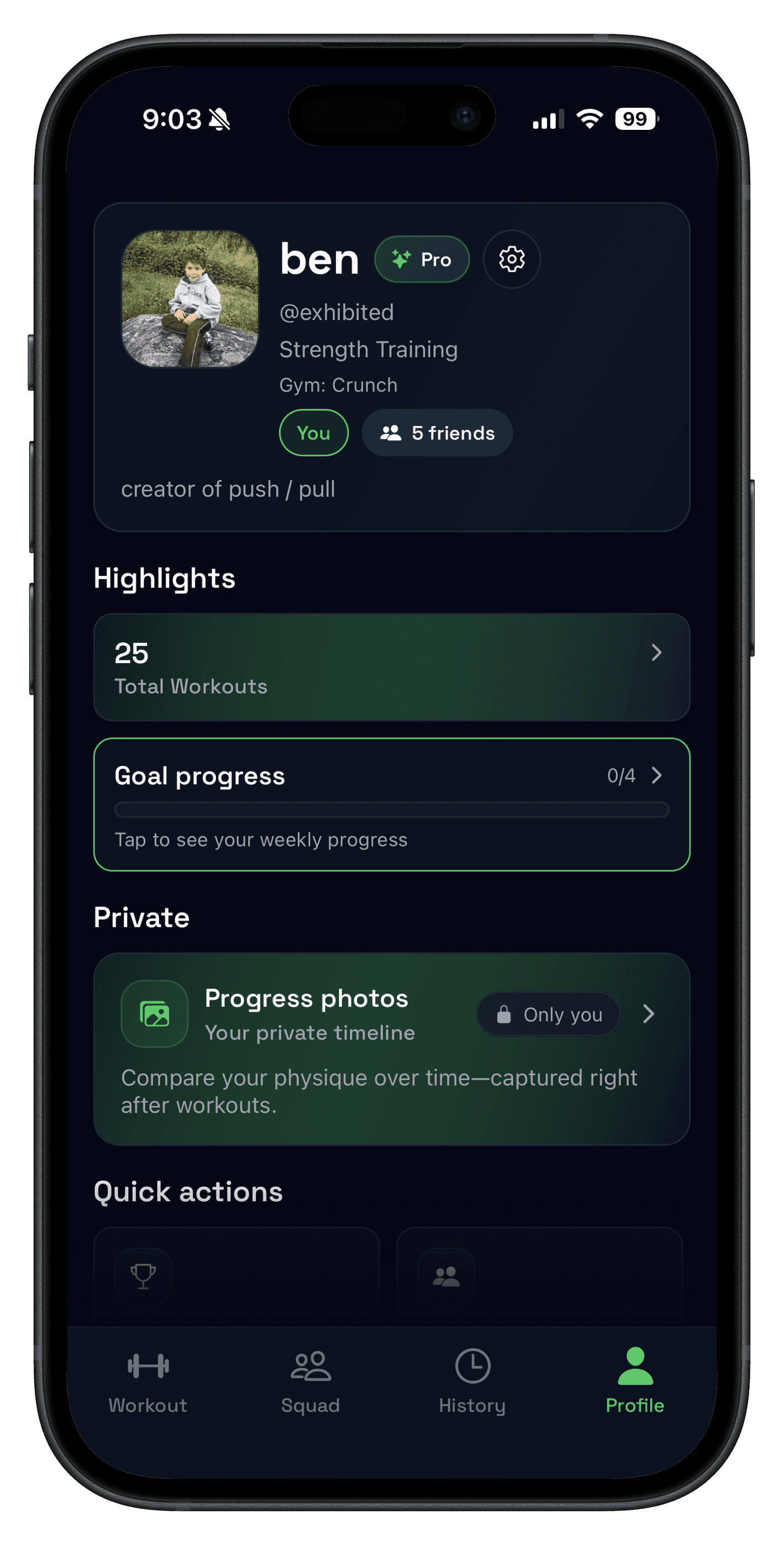
Push/Pull is designed to make consistency easier, not more complicated. It focuses on:
- Fast workout logging with reusable templates
- Clear progress history that is easy to scan
- Social accountability through squads
See the full feature set•Squads and accountability
If you are just starting (or restarting)
Forget the perfect routine. Start with:
- 2 to 3 workouts per week
- A plan you can repeat
- A system that tracks what you actually do
Then build up only if consistency is locked in.
Final takeaway
You do not need:
- Daily workouts
- Extreme programs
- Perfect discipline
You need:
- A realistic schedule
- A simple system
- Consistency over months, not days
Train less if it means training longer. That is how progress compounds.
Related reading
- Workout Apps: How to Choose the Best Workout App for Your Training
- Not Logging Workouts Costs You Gains: The Simple Fix That Works
- Workout Template: Build a Simple Strength Plan You Can Repeat
Ready for a system that keeps you consistent?
Push/Pull is available now on the App Store. It is a social-first workout tracker with fast logging, clear progress history, and squads for accountability.