Workout Recovery: Should You Train Today? A Simple Readiness Checklist
A simple readiness checklist to decide: train, modify, or rest—plus recovery habits that keep progress moving.
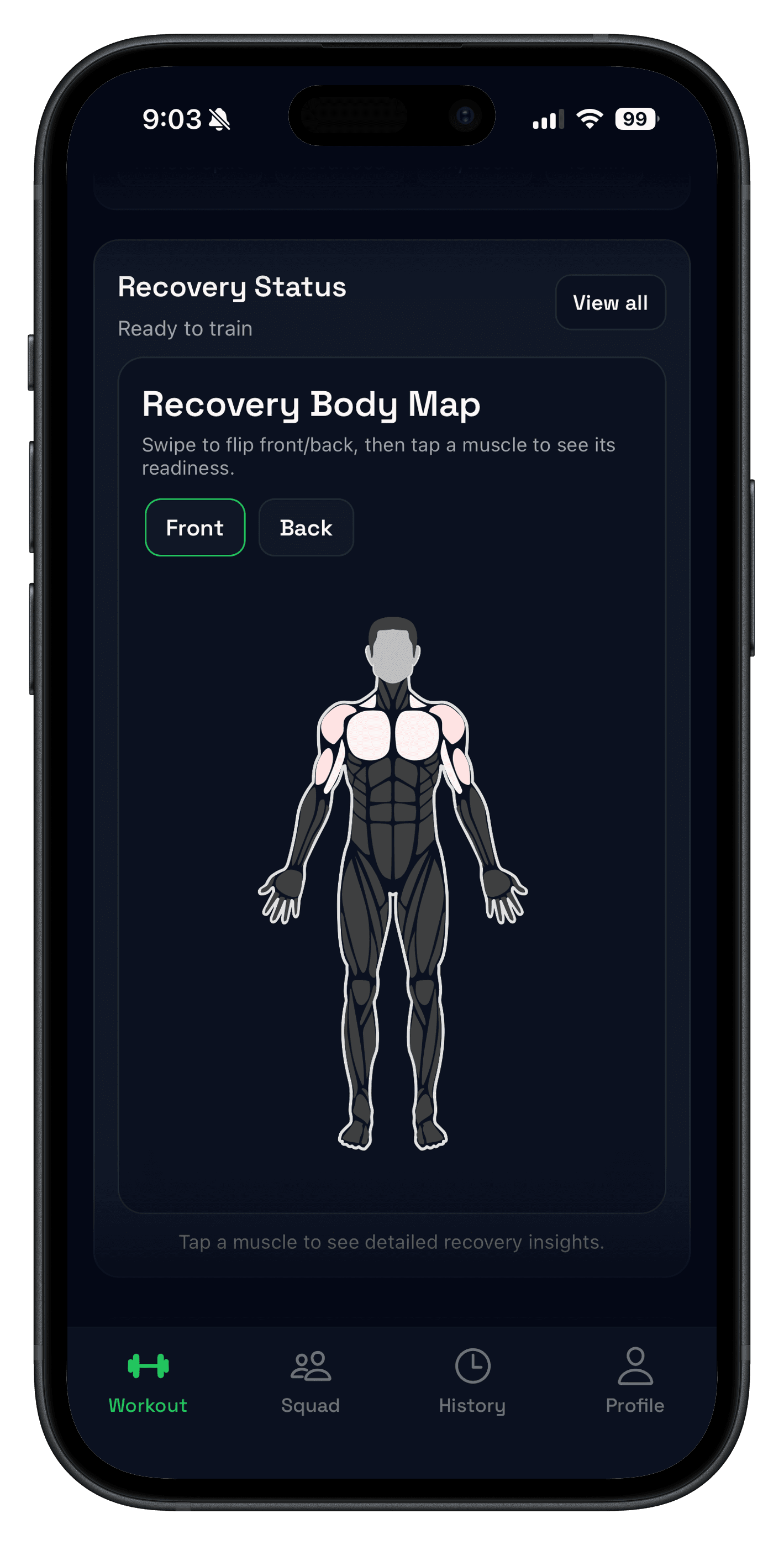
The best recovery plan is the one you can follow on a random Tuesday when life is busy, sleep is not perfect, and motivation is average. Most people do not need a complicated “readiness score.” They need a simple way to decide: train, modify, or rest.
This guide gives you a 60-second checklist to make that call, plus a few recovery habits that actually move the needle (without turning your training into a wellness project).
If you want a calm way to track how you feel alongside your workouts, Push/Pull includes quick recovery notes and clear training history so decisions get easier over time.
If you want a strength training tracker that keeps recovery notes next to your lifts, see our strength training tracker guide.
First: separate soreness, fatigue, and pain
“Am I recovered?” is often the wrong question. What you really need is to identify which signal you are feeling, because the response is different.
- Soreness (DOMS): stiff, tender muscles after training. Often okay to train through if it is mild to moderate.
- Fatigue: low energy, slow warm-ups, worse bar speed, “everything feels heavy.” Usually a volume or intensity problem (or a sleep problem).
- Pain: sharp, pinpoint, joint pain, numbness/tingling, or pain that changes your movement. This is a stop-and-adjust signal.
A simple rule: soreness is information. Fatigue is feedback. Pain is a boundary. When pain is involved, err on the side of caution and get qualified help if needed.
The 60-second readiness checklist (traffic light)
You do not need perfect recovery to get better. You need enough readiness to train well and avoid digging a hole you cannot climb out of. Use this quick traffic light.
Green: train as planned
- Sleep was decent (or you feel normal energy).
- Soreness is mild and does not change your movement.
- Warm-up sets feel “normal” within 5–10 minutes.
Yellow: train, but modify
- You feel flat, stressed, or under-recovered.
- Soreness is moderate (especially in the exact muscles you are training).
- Warm-up sets feel heavy and stay heavy.
Red: rest or switch to recovery
- You are sick, dizzy, or sleep-deprived.
- You have sharp pain, joint pain, or pain that alters your technique.
- You cannot hit safe positions even with light weight.
How to modify a workout (without losing progress)
Yellow days are where consistency is built. The goal is to keep the habit and keep the signal, while reducing the stress. Here are simple, effective modifications.
- Cut volume first: do 2 sets instead of 3–4, keep the same exercises.
- Keep reps, lower load: stay smooth and leave 2–3 reps in reserve.
- Swap to joint-friendly variants: machines, dumbbells, or tempo reps.
- Drop “finishers”: skip extra volume that turns the session into a grind.
- Shorten the session: 30–45 minutes is enough to maintain momentum.
If you log workouts, you can make modifications intelligently: keep the same key lifts, then adjust sets or load. The goal is not to win the day. It is to keep the week moving.
How much recovery do you actually need?
Recovery is not a number of days. It is your ability to train productively again. For most people, 2 to 4 sessions per week is the sweet spot because it leaves room for life and still builds momentum.
If you are rebuilding consistency, start with this question: “What schedule can I repeat for 8 weeks?” Then build your plan around it. This pairs well with How Often Should You Work Out to See Real Progress?.
Recovery habits that actually help
You can overcomplicate recovery fast. The basics do most of the work. If you only improve a few things, make them these.
- Sleep: aim for consistency more than perfection.
- Protein + total calories: under-eating makes everything feel harder.
- Steps and light movement: active recovery beats lying still all day.
- Stress management: the nervous system counts stress from training and life.
- A realistic plan: too much volume is the most common “recovery issue.”
A workout log makes recovery decisions easier
When you can see what you did last week (and how you felt), recovery stops being a vibe and becomes a pattern. If sessions are getting worse for multiple workouts in a row, it is a signal to adjust volume, sleep, or both.
If you want a simple system for what to track, start with Workout Log: Track Sets, Reps, and Weight Without Overthinking. If you want training that repeats cleanly week to week, build a workout template and let your log guide progression.
FAQ
Should you work out when sore?
Usually yes if soreness is mild to moderate and your movement is normal. Warm up longer, reduce volume, and avoid turning the session into a max-effort day.
What are signs you should take a rest day?
Sharp pain, technique breakdown, persistent poor sleep, or multiple workouts in a row where performance drops. When in doubt, take a lighter day and protect the week.
Is active recovery worth it?
Yes. A short walk, easy bike, mobility, and light blood flow can reduce stiffness and help you feel ready without adding meaningful fatigue.
When should you deload?
If motivation is low, sleep is worse, and workouts feel heavier for 1–2 weeks, a deload can help. Keep the same exercises but cut sets (or load) for a week.
Ready to make training feel smoother?
Log your sessions, keep a simple template, and use the traffic light to adjust without overthinking. Over a few weeks, recovery becomes predictable.