Is Fitbod Free? 2026 Pricing, 7-Day Trial, and Cost
A source-checked Fitbod pricing guide covering whether Fitbod is free, $15.99 monthly, $95.99 yearly, 7-day trial rules, and a lower-cost alternative.
Quick answer: Fitbod pricing in 2026 is currently $15.99/month or $95.99/yearas the clearest default public pricing from Fitbod's membership checkout. The current U.S. App Store listing may show a different platform-specific amount, so your own checkout remains the final price.
If you are searching for Fitbod pricing official 2026,Fitbod app pricing 2026, or the official monthly and yearly price, treat the membership checkout as the published default, then confirm the final in-app checkout amount on your own device before subscribing.
Is Fitbod free? It is free to download, but the current official checkout and App Store copy point users toward free-trial access followed by an auto-renewing paid subscription. If you already know your split and want a cheaper Fitbod alternative after that trial, Push/Pull is listed at $6.99/month or $49.99/year after its own 7-day trial.
That makes the practical answer to is Fitbod free more specific than “yes” or “no”: yes, the app can be downloaded for free; no, the current pricing flow does not present Fitbod as a permanent full-access free workout tracker.
Updated August 10, 2026:this comparison uses Fitbod’s official membership checkout, current U.S. App Store listing, and Push/Pull's published pricing section.
Fitbod pricing 2026: monthly, yearly, free trial, and App Store differences
- Official published Fitbod pricing in 2026: $15.99/month or $95.99/year on the membership checkout.
- Platform pricing: Fitbod says regional, promotional, and platform-specific checkout prices can vary.
- Push/Pull pricing: $6.99/month or $49.99/year after a 7-day free trial.
- What to do with that: verify the exact Fitbod checkout price on your device, then compare the workflow before you compare the bill.
| Plan | Push/Pull | Fitbod | What to verify |
|---|---|---|---|
| Monthly | $6.99 after a 7-day trial. | Membership checkout lists $15.99; platform checkout pricing can vary. | Check the exact in-app checkout price on the platform you plan to use. |
| Yearly | $49.99 after a 7-day trial. | Membership checkout lists $95.99; platform checkout pricing can vary. | Platform pricing and older SKUs can differ, so do not assume one universal price. |
| Free version / trial | 7-day free trial. | Free to download, with App Store copy describing a free trial followed by an auto-renewing subscription. | Plan your comparison week before the renewal date arrives. |
How much is Fitbod per month or per year after the free trial?
As of August 10, 2026, Fitbod's official membership sources show a $15.99 monthly plan and a $95.99 yearly plan. Fitbod says pricing can vary by region, promotion, and platform, so $15.99/month and $95.99/year are the default published web prices while your own App Store or website checkout remains the final price for your account.
What is the official Fitbod price in 2026 that you should trust first?
Start with Fitbod's membership checkout because it is the clearest official published web price: $15.99/month or $95.99/year as of August 10, 2026. If your App Store checkout shows a different number, treat that device-specific checkout screen as the final price for your account.
Why does the App Store show multiple Fitbod prices?
Fitbod’s official subscription guidance says prices can vary by region, promotion, and platform. Its membership checkout still publishes $15.99/month or $95.99/year, while App Store checkout can show a different amount for your account.
In practice, that means the safest way to read Fitbod pricing is: use the membership checkout as the default published web price, then use your own in-app checkout screen as the final device-specific price before subscribing.
Use Fitbod's membership checkout as the public reference price. Use your own App Store checkout screen as the final price when it differs from the published web price.
Is Fitbod free in 2026? Fitbod free version limitations vs the 7-day trial
Fitbod is free to download from the App Store, but the current official pricing flow describes trial access followed by paid subscription access. That makes Fitbod a trial-first subscription product rather than an app to treat as a permanently free full-access workout logger.
- No permanent full-access free tier is presented: current official pricing copy frames access around a free trial plus paid subscription.
- The main free-version limitation is time and access: use your own checkout or account screen to confirm what remains available after the trial.
- You can still view past workouts after cancellation: but the app no longer works as an open-ended free workout logger.
That makes Fitbod different from apps where the real question is a capped free tier with limited routines, history, or premium features. If long-term free access is your main filter, compare this page with Hevy free version limitations and Strong free version limitations. If your main filter is whether Fitbod's higher price buys the right workflow, keep reading the alternative comparison below.
What makes a good Fitbod alternative?
- Lower effective cost: monthly and yearly plans should match your training horizon.
- Fast logging flow: sets, reps, and weight should be easy to enter between sets.
- Progression clarity: you should know what to beat next session.
- Watch workflow fit: watch and phone behavior should match your gym habits.
Push/Pull vs Fitbod: which is better for lifters?
- Choose Push/Pull if you already know your split and want lower recurring cost, fast logging, and clearer progression review.
- Choose Fitbod if you want the app to recommend more of each session and you are comfortable paying more for that style of guidance.
- Test both if Apple Watch use, pricing clarity, or planner-vs-log preference is still uncertain.
If you want the planning angle on its own, compare this page with the AI workout planner page and the workout planner app guide.
Source snapshot (checked August 10, 2026)
- Fitbod membership checkout pricing snapshot and plan data: app.fitbod.me
- Fitbod U.S. App Store listing, in-app purchase SKUs, and free-trial subscription copy: App Store
- Push/Pull pricing and trial details: push-pull.app pricing section
Push/Pull vs Fitbod comparison table (checked August 10, 2026)
| Criterion | Push/Pull | Fitbod | Why it matters | Current source |
|---|---|---|---|---|
| Monthly price (published default) | $6.99/month after 7-day free trial. | Fitbod’s membership checkout lists $15.99/month; platform checkout pricing can vary. | Monthly cost compounds quickly if you log year-round. | push-pull.app pricing + Fitbod membership checkout + App Store |
| Annual price (published default) | $49.99/year after 7-day free trial. | Fitbod’s membership checkout lists $95.99/year; platform checkout pricing can vary. | Annual pricing is usually the real long-term decision point. | push-pull.app pricing + Fitbod membership checkout + App Store |
| Trial / free access | 7-day free trial before paid subscription. | Fitbod is free to download, with App Store copy describing a free trial followed by an auto-renewing subscription. | Both apps should be tested in one focused trial week before renewal hits. | Push/Pull pricing page + Fitbod App Store listing |
| Progression workflow | Built-in progressive overload suggestions plus history and fatigue trends for next-step clarity. | Fitbod positions premium around personalized workout recommendations, exercise tracking, and progress insights. | Clear progression guidance improves consistency across training blocks. | Push/Pull feature pages + Fitbod App Store product description |
| Apple Watch workflow | Apple Watch support plus Live Activity options are available. | Fitbod’s current App Store listing shows Apple Watch compatibility and describes Apple Watch integration. | Watch behavior directly affects in-gym friction. | Push/Pull Apple Watch pages + Fitbod App Store |
| Price clarity | Monthly and yearly plans. | Monthly and yearly pricing, with platform checkout amounts that can vary. | Cleaner pricing makes switch decisions easier before renewal. | Fitbod membership checkout + App Store |
Push/Pull is currently listed at $9 less per monththan Fitbod's $15.99 monthly plan, and $46 less per yearthan Fitbod's $95.99 yearly plan. Platform-specific checkout prices can differ, so confirm the final amount before comparing.
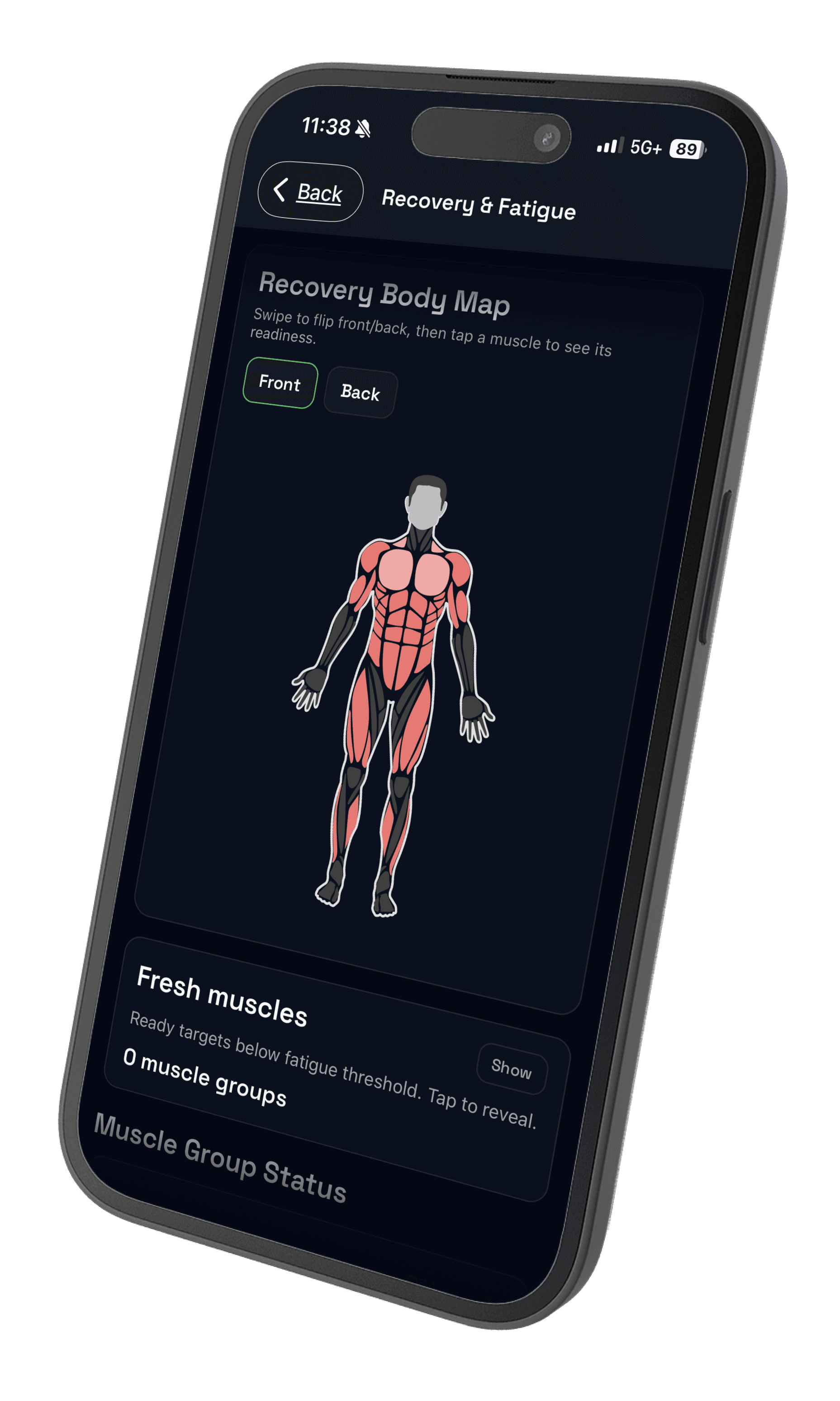
Related product pages: workout logging, strength tracking, AI workout planner, workout planner app guide, progressive overload suggestions, recovery body map, and Apple Watch support.
Fitbod pricing can vary by platform, region, or promotion, so treat this as a dated snapshot and verify in your own checkout flow before subscribing.
Pros and cons
Push/Pull pros
- Lower published monthly and yearly pricing than Fitbod at this snapshot.
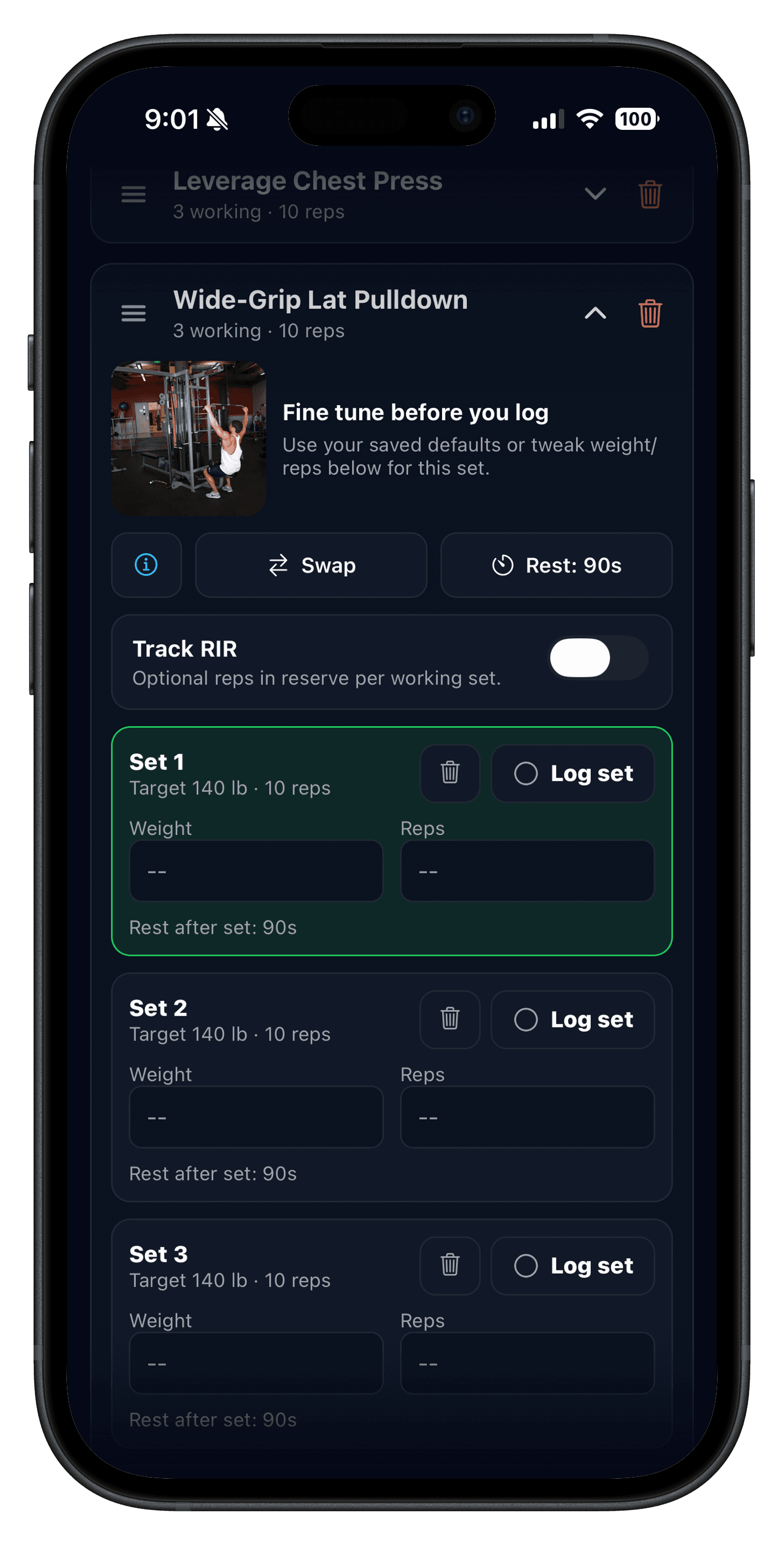
- Built-in progressive overload suggestions with history and fatigue context.
- Fast logging flow with templates built for repeatable strength blocks.
- Apple Watch support with iPhone-friendly in-session workflow.
Push/Pull cons
- Subscription is required after the 7-day trial.
- If you prefer one app to fully auto-generate most decisions, fit can vary by training style.
Fitbod pros
- Fitbod positions premium around personalized workout recommendations and progress insights.
- Multiple subscription routes (website, App Store, Google Play) and occasional lifetime promotions.
- Apple Watch support is documented for in-workout logging and rest timers.
Fitbod cons
- Higher published monthly/yearly pricing at the current snapshot.
- Fitbod says the final subscription price can vary by region, promotion, and platform.
- Fitbod's Apple Watch article keeps the watch workflow companion-based: iPhone starts and saves the workout.
How to compare Push/Pull vs Fitbod fairly in one week
- Use the same 3-4 day template in both apps.
- Log all working sets in real time.
- Track how quickly each app shows your next target for the main lift.
- Compare total friction plus cost and keep the better value workflow.
For setup ideas, pair this with Workout Log: Track Sets, Reps, and Weight Without Overthinking and Progressive Overload: Simple Rules to Get Stronger.
Who this is for
- Fitbod users evaluating lower-cost alternatives before renewal.
- Lifters who want clearer progression guidance without paying top-tier subscription pricing.
- Apple Watch users comparing real in-gym workflow friction.
FAQ
What is Fitbod pricing official in 2026?
How much is Fitbod per month in 2026?
How much is Fitbod per year in 2026?
Why does Fitbod show multiple prices in the App Store?
Is Push/Pull cheaper than Fitbod?
Is Fitbod free in 2026?
What are Fitbod free version limitations?
What is the best Fitbod alternative for progressive overload?
Does Fitbod work on Apple Watch without an iPhone?
How should I compare Push/Pull vs Fitbod fairly?
Is Fitbod still worth considering if Push/Pull costs less?
Related reading
- Caliber vs Fitbod: coaching-style plans or adaptive workouts?
- Strong App Alternative: Push/Pull vs Strong for Lifters
- Push/Pull vs Hevy: Which App Is Better for Progressive Overload?
- Best Progressive Overload Apps for Strength Training (2026)
- Best Gym Tracker App for Strength Training
- Strength Training Tracker
Switch for one week and compare cost plus clarity
If you are deciding between Push/Pull and Fitbod, run your normal template in Push/Pull for one week and compare progression clarity, logging speed, and total subscription value before your next renewal.